
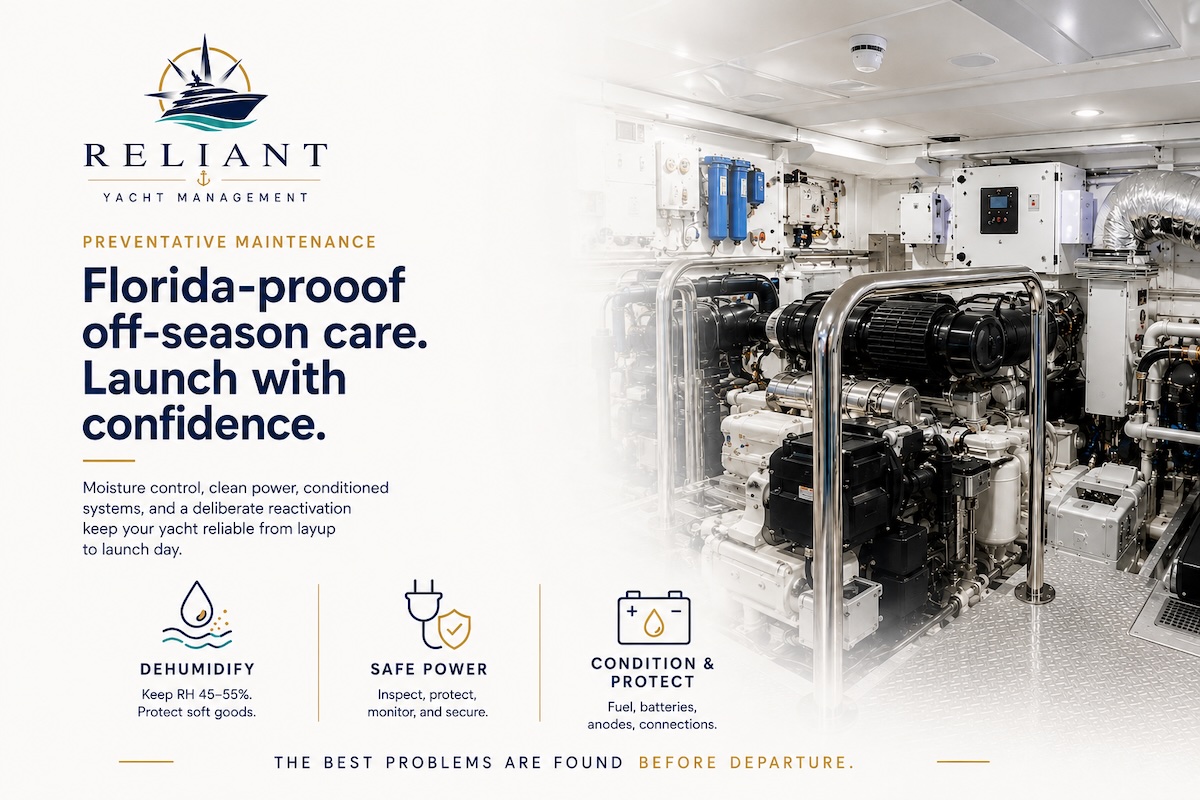
Off-Season Yacht Care in Florida: How to Prevent First-Day Failures When You’re Away for Months
Florida’s heat, humidity, and salt air are relentless. For absentee yacht owners—especially seasonal residents and busy professionals—the real risk isn’t just a storm on the radar. It’s what happens quietly aboard your vessel while it sits unattended for weeks or months.
Mold blooms in closed cabins, batteries sulfate, fuel degrades, air conditioners freeze up, and corrosion accelerates in ways that owners from more temperate climates often underestimate. Then comes that first day back: breakers trip, engines won’t start, AC smells musty, and your “welcome aboard” turns into a troubleshooting session.
This guide outlines a Florida-specific approach to off-season yacht care, with a focus on:
- Dehumidification
- Shore power safeguards
- Fuel and battery conditioning
- Corrosion prevention
- A step-by-step reactivation strategy to avoid first-day failures
1. Managing Humidity: Dehumidification Done Right
Closing up a yacht in Florida is very different from winterizing in a dry, cold climate. Here, your enemy is moisture.
Why humidity control matters
Sustained relative humidity above ~60% invites:
- Mold and mildew on soft goods, headliners, and lockers
- Musty odors in cabins and air handlers
- Corrosion on electrical connections and electronics
- Swelling and damage to interior woodwork
Practical dehumidification strategies
For multi-month absences, consider a layered approach:
-
Air conditioning in “dehumidify” mode (if available)
- Set slightly higher than normal cabin temperature (e.g., 78–80°F)
- Ensure condensate drains are clear before leaving
- Use temperature and humidity sensors (with remote alerts if possible)
-
Stand-alone marine dehumidifiers
- Choose units designed for continuous operation in a marine environment
- Secure them against movement; route drains directly to sinks or shower sumps
- Avoid relying on small residential units that can clog or overflow
-
Airflow and ventilation
- Leave interior doors, drawers, and lockers cracked to promote air circulation
- Remove or elevate cushions where possible so air can move underneath
- Open bilge access panels so trapped moisture doesn’t accumulate
-
Soft goods and surfaces
- Launder and thoroughly dry towels, linens, and bedding before leaving
- Consider removing high-value cushions or mattresses if long-term storage is expected
- Wipe down heads, showers, and galley surfaces with appropriate cleaners to remove soap scum and organic residue that feed mold
Consistent inspection is critical. Even with the best plan, drains clog, units fail, and settings get changed. This is where scheduled vessel inspections and photo documentation catch small humidity issues before they turn into full interior remediation projects.
2. Shore Power: Safeguards That Protect Your Vessel (and Your Wallet)
Many off-season problems begin—and go unnoticed—at the dock pedestal.
Key shore power risks for absentee owners
- Loose or overheated connections causing damage or fire risk
- Breakers tripping, leaving AC, dehumidifiers, and chargers offline
- Voltage fluctuations stressing sensitive electronics
- Inadequate load management overtaxing a single circuit
Best practices for shore power in Florida marinas
-
Inspect connections before you leave
- Verify shore cord ends are clean, undamaged, and fit securely
- Confirm proper polarity and voltage at the pedestal
- Check for heat discoloration at plugs and inlets
-
Simplify and stabilize your load
- Decide what truly needs to stay on: battery chargers, dehumidification, security/monitoring systems
- Turn off non-essential loads (water heaters, ice makers, certain galley appliances)
- Label breakers clearly so anyone assisting in your absence can verify the correct configuration
-
Monitoring and verification
- Use remote power monitoring where possible to alert you to power loss
- Arrange for periodic checks of shore power status, charger operation, and AC performance
- Document any shore power changes or anomalies to build a history of issues over time
A professional owner’s representative can serve as your eyes and ears—physically verifying shore power integrity, confirming loads, and documenting conditions with photographs and notes.
3. Fuel and Battery Conditioning for Long Absences
Florida’s warmth accelerates chemical reactions. Fuel degrades faster; batteries self-discharge more quickly. “I left it fine in May” doesn’t always translate to “it will start in November.”
Fuel care in a Florida climate
-
Stabilize and protect your fuel
- Top off tanks to reduce condensation, especially in diesel systems
- Use quality fuel stabilizers appropriate for gasoline or diesel
- For diesel: consider biocides where microbial growth is a known issue
-
Keep filters and water separators under control
- Service primary and secondary filters before your absence
- Drain water separators and note conditions for future comparison
- Plan periodic engine runs and load testing (by a captain or manager) if the vessel will sit for many months
Battery conditioning and oversight
-
Charger and battery settings
- Verify charger profiles match your battery chemistry (AGM, flooded, lithium, etc.)
- Confirm chargers are functioning and cooled properly
- Check and document resting voltages and charge status at departure
-
Battery health over time
- Inspect terminals and connections for corrosion; clean and protect as needed
- Where safe and appropriate, disconnect non-essential parasitic draws
- Schedule periodic checks of voltage and charger operation, with photos and readings logged in a central record
Regularly documented readings let you spot declining battery performance early instead of discovering dead banks on the day you plan to depart.
4. Corrosion Prevention in a High-Salt, High-Heat Environment
Corrosion doesn’t announce itself. It creeps—from minor staining and pitting into failed components and expensive repairs.
Areas that demand special attention
- Bonding systems and sacrificial anodes
- Through-hulls, seacocks, and underwater fittings
- Steering and trim components
- Electrical connections, bus bars, and ground points
- Stainless hardware around the bow, transom, and swim platforms
Practical corrosion control steps
- Rinse topsides and hardware thoroughly with fresh water before long absences
- Inspect and replace anodes based on condition, not just time
- Check for stray current corrosion signs (rapid anode loss, unusual pitting)
- Use appropriate corrosion inhibitors on electrical and mechanical connections
- Photograph key areas consistently over time to spot subtle changes
Platforms like Reliant Vessel Intelligence are being built specifically to track this type of visual history, so emerging corrosion is flagged before it becomes structural damage.
5. A Step-by-Step Reactivation Strategy to Avoid First-Day Failures
The most expensive mistakes often occur during rushed reactivation. A systematic, documented process helps prevent surprises.
Recommended reactivation sequence
-
Initial visual walkthrough
- Check dock lines, fenders, shore power connection, and water hookups
- Look for staining, standing water, unusual odors, or visible damage
-
Power and systems check
- Verify shore power and battery charger status
- Turn on key breakers in a controlled sequence, watching for abnormal loads or tripped breakers
- Confirm AC and dehumidification systems are operating correctly
-
Interior and bilge inspection
- Open all compartments; inspect for mold, leaks, or pests
- Check bilges for water, oil sheen, or unusual debris
- Test sumps and bilge pumps individually
-
Engine room and machinery
- Check fluid levels and look for leaks under engines, generators, and hydraulics
- Inspect belts, hoses, clamps, and seacocks
- Confirm strainers are clean and open
-
Fuel and batteries
- Inspect filters and water separators
- Verify battery voltages and charger operation
- Confirm starting batteries are healthy before cranking
-
Start-up and systems testing
- Start engines and generator; monitor temps, pressures, and exhaust
- Test steering, thrusters, windlass, navigation electronics, and communication systems
- Run air conditioning under load and verify condensate draining properly
-
Short sea trial
- Conduct a brief run and test all systems under operating conditions
- Note and document any abnormal vibrations, alarms, or behavior for follow-up
When this process is handled by a professional manager—with notes, photos, and clear recommendations—owners step aboard to a ready vessel, not a punch list.
Professional Care Aboard. Complete Visibility Ashore.
Florida’s climate demands more than occasional check-ins and scattered text updates. It requires consistent oversight, preventive planning, and accountable follow-through—especially when you’re hundreds of miles away.
Reliant Yacht Management serves owners along Florida’s Space Coast and Southwest Florida with scheduled inspections, documented condition reports, vendor coordination, and an intelligent platform that keeps your vessel’s history organized and accessible.
If you’d like to turn off-season worry into confident, first-day readiness, contact Reliant to schedule a yacht management consultation.