How to tell an old stain from an active leak
A dark mark on the headliner can mean an old leak, condensation, mildew or active water. How to read it, when to test further, and why photo history helps.
Practical yacht-management guidance, preventive maintenance insights, ownership planning, and real-world advice designed to help you protect your vessel and enjoy it with greater confidence.
Explore preventive maintenance, vessel readiness, storm preparation, owner visibility, and professional yacht-management insights.
How to rank engine, electrical, AC and hull tasks by consequence of failure, set intervals by real usage, and let a dated record adjust them over time.
Sort boat spending into routine care, planned refits and repairs, build reserves from real condition, and see what putting off maintenance costs later.
How the software we use organizes inspection photos, flags possible changes for a person to review, and where hands-on expertise always takes over.
What a good inspection report includes, and how repeat photos and a single dated record help an owner decide on repairs from far away.
A damp fitting or warm terminal rarely stays small. Here's how problems spread through fuel, cooling and electrical systems, and how to stop them early.
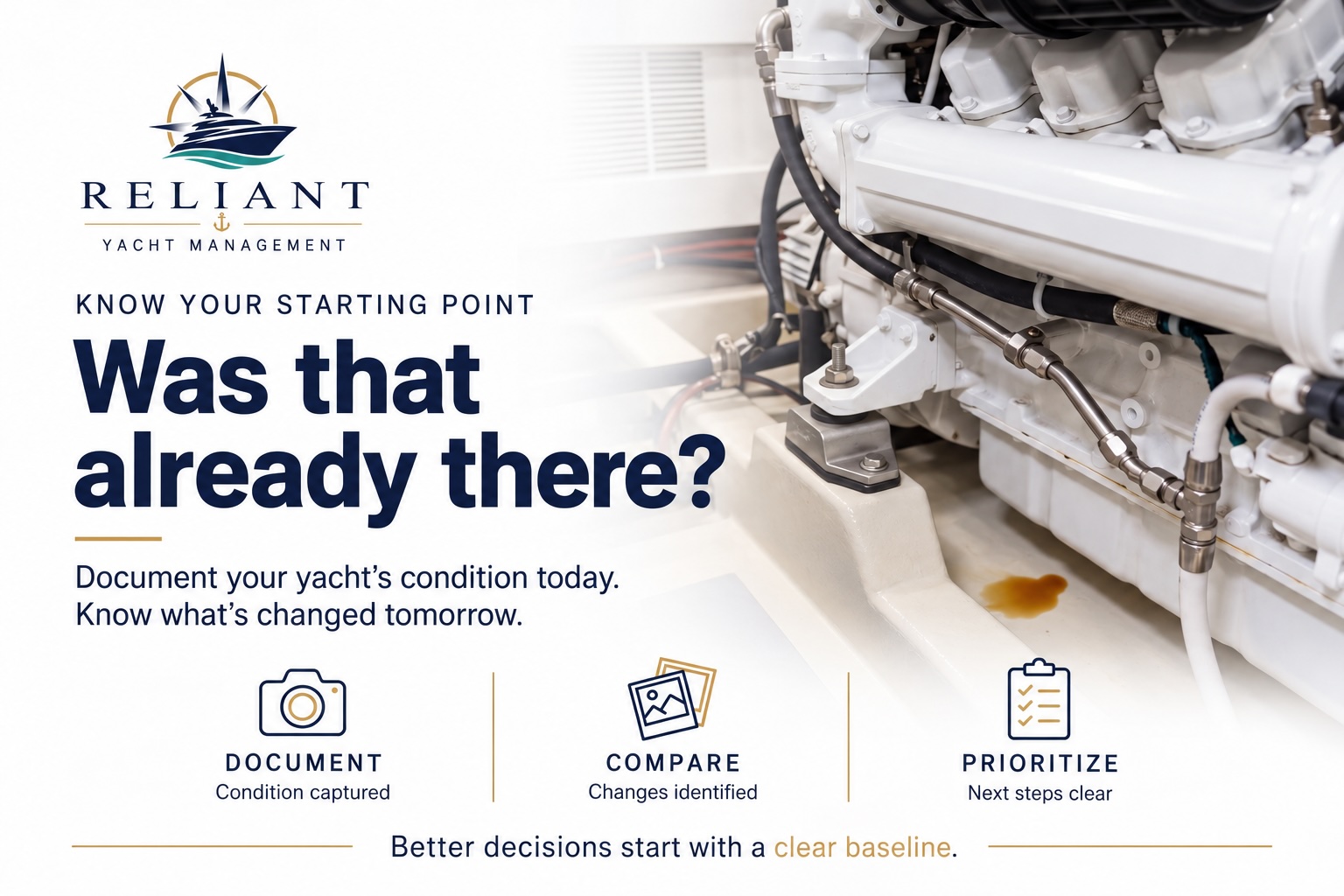
The inspections, photo sets, equipment records and paperwork that give a newly managed boat a clear starting point, and how it prevents disputes later.
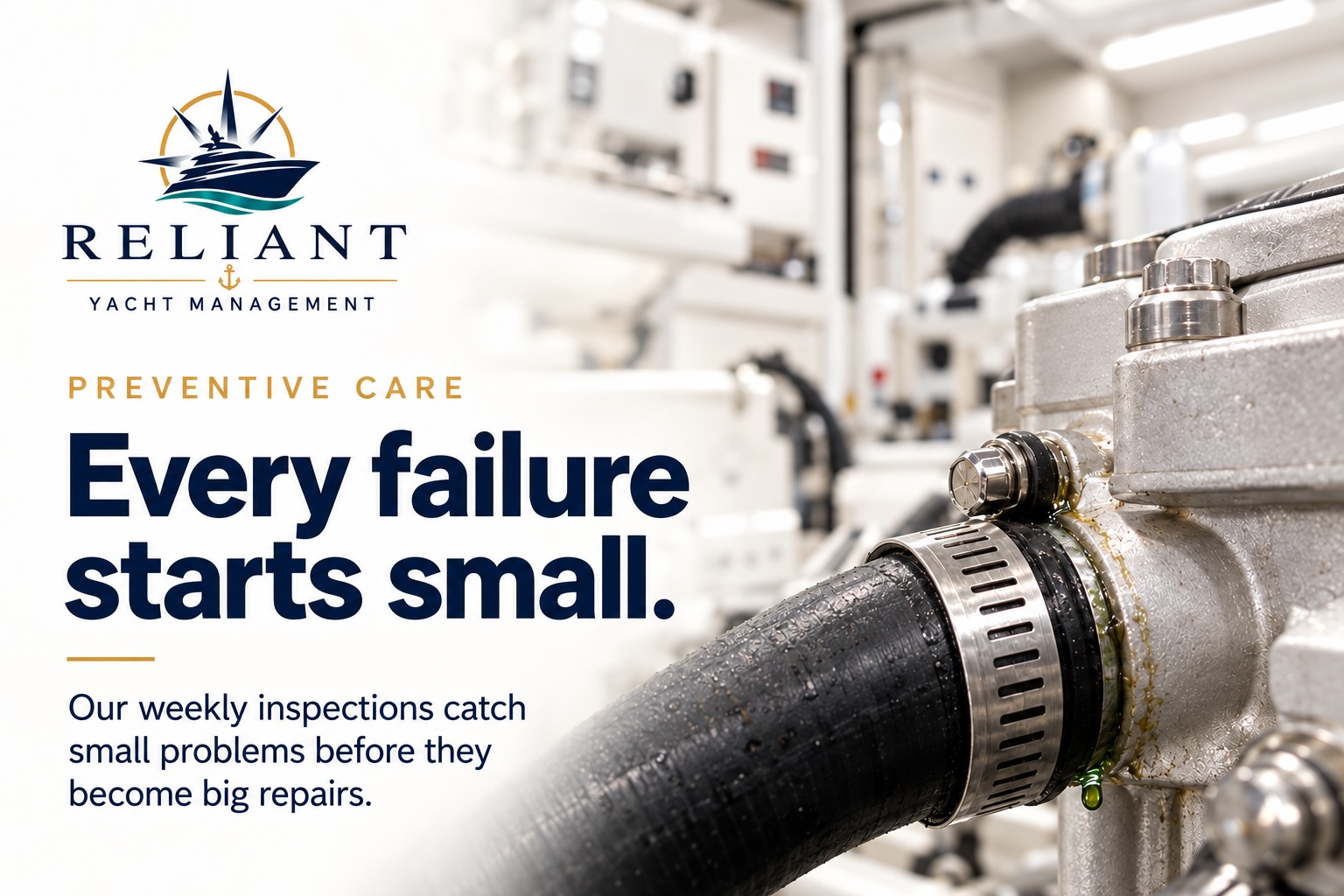
How salt air, heat and humidity turn small problems into big repairs on Florida boats, and how regular inspections and a dated record cut downtime.
What a weekly and monthly check routine covers on a Florida boat, which photos to take, and how a dated record keeps her ready and proves her history.
What a captain handles on the water, what a yacht manager handles between trips, and how one shared record keeps findings from slipping through the gap.
Fixed-angle photos and repeat readings show corrosion, wear and slow changes a quick look misses, and build a dated record for repairs and resale.
A step-by-step check for after yard work: fluids, alarms, a sea trial and a written sign-off, so problems surface at the dock and not on your next trip.
How salt, sun, warm-water growth and storm season wear on boats kept on the Space Coast and in Southwest Florida, and how to time inspections around them.
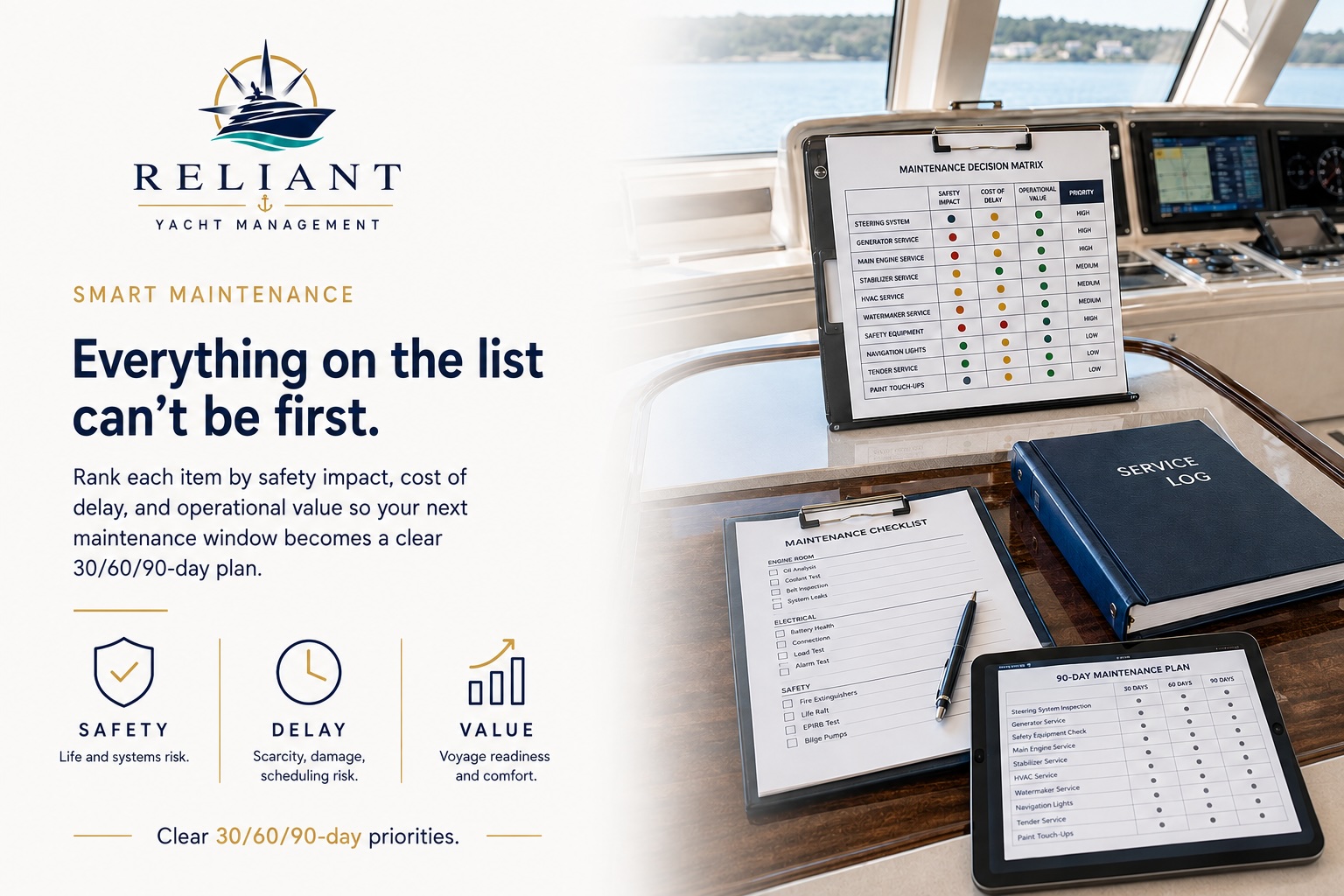
How Florida boat owners can sort a long maintenance list by safety, the cost of waiting and how they use the boat, then spend with more confidence.
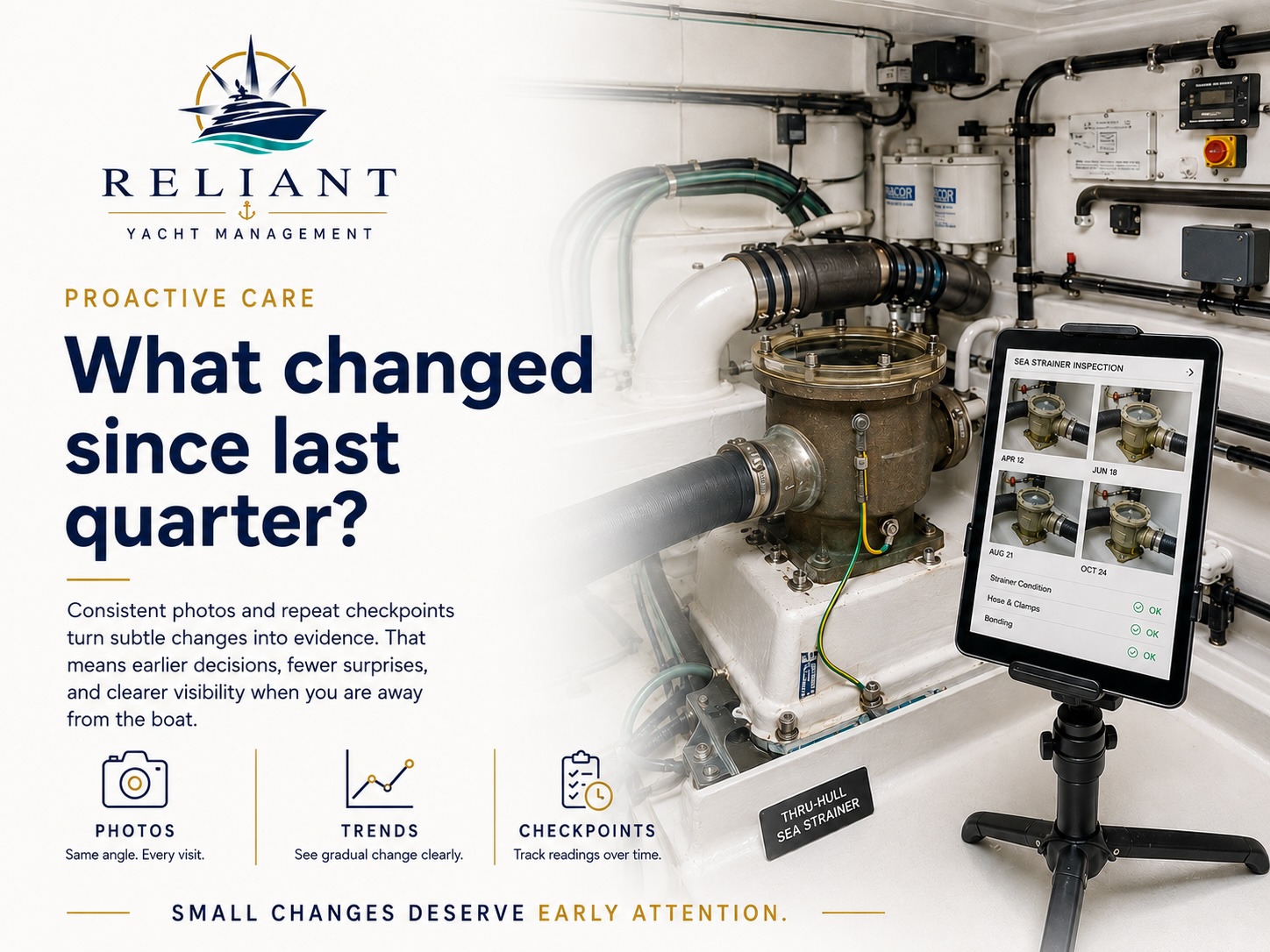
Comparing inspection photos visit to visit, alongside a dated service history, shows Florida owners what's changing aboard and which repairs come first.
The shore-power inlet, seacocks, strainers and chafe gear owners skip on a quick look, and a short checklist to run before you leave the dock.
How to vet marine vendors, sequence repairs so trades don't clash, check insurance and marina rules, and keep one record so your seasonal list gets done.
How inspection photos, service history and project notes become ranked findings and verified repairs for Space Coast and Southwest Florida boat owners.
How Florida heat, humidity and salt affect a boat left for months, and the order to check shore power, fuel, batteries and engines on restart.
Five questions, asked in order, for sorting a boat's maintenance list into fix now, plan for and watch, so money goes to the right jobs first.
How we help first-time owners sort survey findings, set a condition baseline, document equipment and plan maintenance without feeling overwhelmed.

How new owners can sort survey findings by risk, assign each to someone, confirm the work is done and keep a record that helps at resale.
Why your boat's maintenance plan should follow her actual equipment and its manufacturers' schedules, and how good records help with warranty and resale.
A battery can show healthy voltage and still fail under load. Why boats at the dock lose capacity, how to test a battery properly and why a dated log matters.
How a boat's bilge, raw-water strainers and rags show how she's been maintained, and how we turn what we find into a condition baseline.
What to see, hear and smell in your boat's engine room, how to spot what has changed since your last visit, and when to stop and call a mechanic.
How Reliant pairs photo-comparison software with hands-on inspections, one point of contact and a verified record of every job on your Florida boat.
Seven plain questions that show whether a yacht manager marks up vendor bills, hides fees or truly represents you, and what good answers sound like.
How Reliant compares inspection photos over time to spot slow changes aboard your boat, why a person decides what each change means, and the tool's limits.
What firm milestones, photo check-ins and an acceptance checklist each prevent when a boat repair drags on, and why defining done matters most.
A spotless, fueled boat can still hide a weak battery or an unfinished repair. Here are the three written records to see before your weekend aboard.
How inspection photos, open concerns, sorted recommendations and a dated service history let you see your boat's condition from anywhere, before you spend.
How we sequence a new owner's first three months, from sorting the survey and sampling fuel to zinc schedules, a first trip and portal access.
How photos compared over time, a dated service history and clearly sorted findings show Florida owners what their boat needs while they're away.
How we sort survey recommendations, scope repairs around the cause, and verify vendor work with proof photos and sea trials for boats around Fort Myers.
The order we work in on a Friday at Port Canaveral, from systems checks to fuel, provisioning and cleaning, with photos in your owner portal.
How we stage dock lines, fenders, shore power and canvas before a Space Coast storm, and how you can see every step, with proof photos, from anywhere.
Our articles are designed to help owners recognize maintenance priorities earlier, understand their vessels more clearly, and make better decisions throughout ownership.