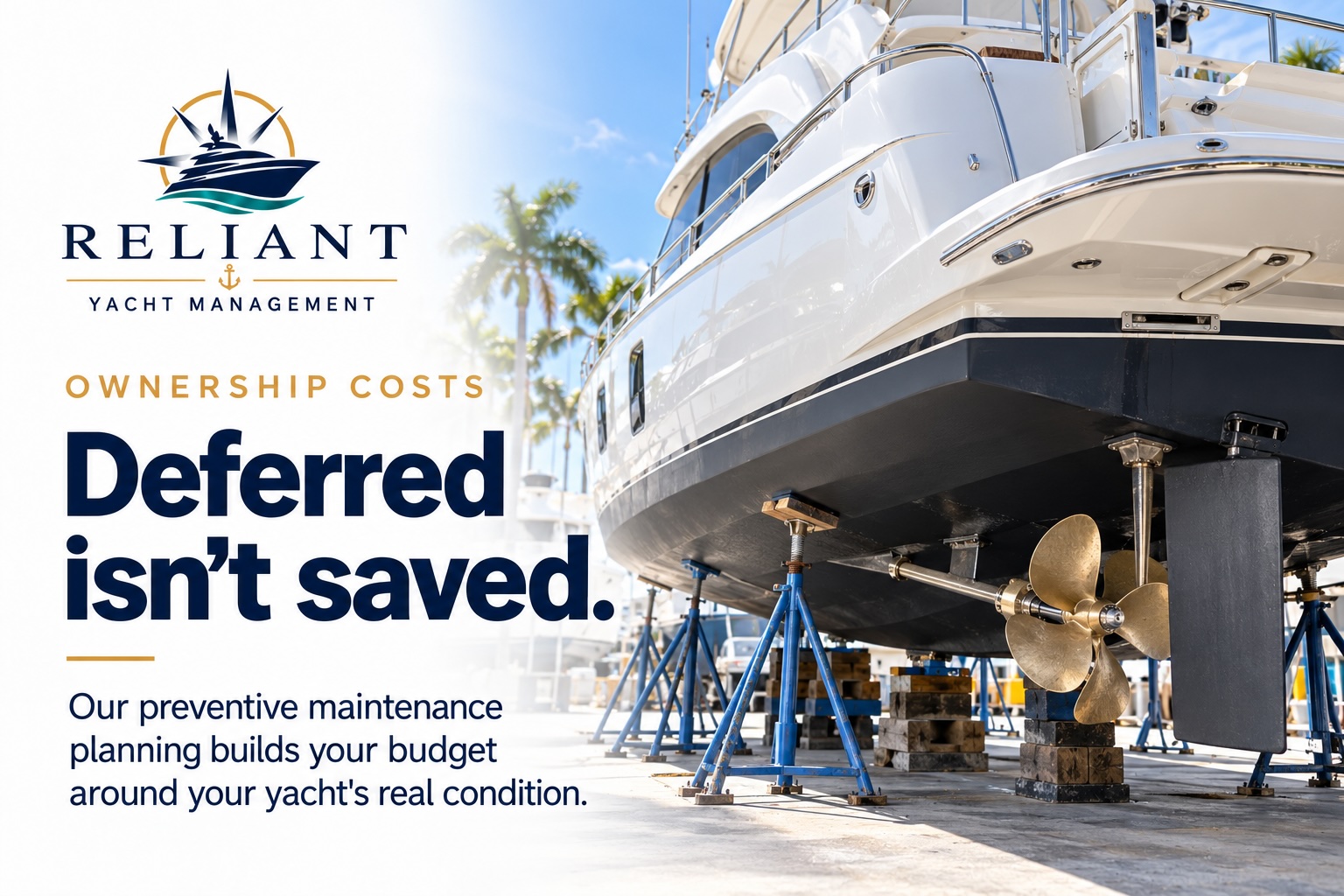


A work order marked “complete” tells you the yard believes the job is finished. It doesn’t tell you whether the new raw-water impeller is pushing water, whether the shaft seal they adjusted drips at cruising speed, or whether a hose clamp behind the generator was left finger-tight. You only get those answers by going aboard, running her and looking.
This is the check we run when a boat comes back from the yard, before her owner plans the next trip. It’s written for owners who can’t be at the dock on delivery day, and it works just as well if you can. The aim is to find anything the yard missed while the yard still owns the fix, rather than on the first morning of your weekend.
Start with the paperwork, then the boat
Before anyone turns a key, read the work order against the original estimate: what was approved, what was done and what was added along the way. Anything extra gets a question before it gets paid.
Then walk through the line items and find each piece of work with your own eyes. New belts, replaced hoses, serviced seacocks. If a job can’t be seen, ask what shows it was done.
Fluids before the engines turn
Yard work disturbs fluids. Oil gets changed, coolant gets drained for a hose job, and levels are easy to leave a little low or a little high. Check engine oil, coolant, transmission fluid and generator oil cold, against the marks on each dipstick and sight glass.
Look at the drip pans under each engine and the bilge under the work area, and wipe them clean. A clean pan now gives you something to compare against after the sea trial. Open the raw-water strainers too. Some jobs mean closing a seacock and opening a strainer, and a lid that isn’t seated properly will draw air.
Alarms and gauges at the dock
Start each engine and the generator and watch the panel. Gauges come up and settle where she normally runs. Cooling water appears at the exhaust within a few seconds of start, which is the quickest sign a new impeller is doing its job.
Test what can be tested in the slip: the high-water alarm, the bilge pump switches in automatic and manual, and the smoke and CO detectors where they’re fitted. An alarm nobody has tested is better found out at the dock than offshore.
The sea trial
Some problems only show under load. A proper sea trial takes the boat through her normal range: idle, cruise and, where conditions allow, a short run near wide-open throttle. Note the RPM at each step along with engine temperatures and oil pressures, and compare them with her history. A boat that used to reach a given RPM and now falls short points to a fouled bottom or a prop problem, and sometimes the engine itself.
Listen and feel as well. New vibration, heavier steering, a gear shift that clunks. Run the systems the yard touched and the ones near them: the generator under load, the AC, the windlass, the thrusters if she has them. Record engine hours when you leave and when you return so the service history matches the run.
Sea trials are part of our captain services, and when yard work is the reason for the trial, the results go back against the work order.
A second look while everything is warm
Hoses and clamps that look dry when cold can weep once the engine is at temperature. Back in the slip, go into the engine room before it cools. Check every hose and fitting that was worked on, the shaft seals, the exhaust connections and those drip pans you cleaned earlier. Look for weeping at clamps and fresh drops underneath.
A damp spot under a fitting is a reason to look closer, not proof of a failure. Wipe it dry, note where it was, and check it again after the next run before deciding what it means.
Signing it off
Each line on the work order ends up in one of three places: verified with a photo, sent back to the yard with a clear description of what’s wrong, or deferred by the owner with the reason written down. An issue you chose to live with for now is very different from one nobody noticed.
When we manage your boat, this is how a yard job closes in Harbor Guardian. Each item carries its proof photo, anything found on the sea trial becomes a follow-up work order, and the dated record shows what was done and when. You can read it from your phone wherever you are, and it’s the same service history that holds up at resale and for insurance.
Why it’s worth the afternoon
Skipping this step tends to cost you at the worst moment: a temperature alarm on the way out of Port Canaveral, or a generator that trips on the first hot afternoon of the season. A loose clamp found at the dock is a short call back to the yard. The same clamp found halfway through a trip is a cancelled weekend.
Message us with your boat and the yard she’s in, and we’ll run the checks and the sea trial before your next trip.