Coming Back to a To‑Do List: How Seasonal Yacht Owners Can Coordinate Repairs Without the Chaos
For many seasonal residents, returning to Florida means returning to a yacht that has a growing list of “we’ll deal with it when we’re back” items. The work itself is only half the challenge. The other half is coordinating the right specialist, in the right order, without delays, miscommunication, or surprises on the invoice.
Effective yacht repair and maintenance coordination comes down to five disciplines:
- Qualifying the right vendors
- Staging work in a logical sequence
- Preventing trades from working on top of each other
- Confirming insurance, permits, and compliance
- Centralizing communication and documentation
Handled well, you step aboard to a yacht that’s ready to enjoy. Handled poorly, you spend your season managing chaos at the dock.
1. Qualifying Marine Vendors: More Than “Who’s Available?”
When you’re short on time, the temptation is to call whoever can show up first. That’s where many problems start.
Key questions to qualify a vendor:
-
Are they truly marine specialists?
- Do they regularly work on yachts similar to yours (size, systems, build)?
- Can they provide recent references from comparable vessels?
-
What certifications or affiliations do they hold?
- ABYC, NMEA, manufacturer certifications (for electronics, engines, generators, etc.)
- Insurance requirements from your marina or insurer they already meet
-
How do they document their work?
- Written estimates outlining scope, assumptions, and exclusions
- Photos of work in progress and completed work
- Clear, itemized invoices tied to the original estimate
-
What is their follow‑up process?
- Warranty on labor
- How they handle punch‑list items and call‑backs
Smart owners treat vendor selection as risk management, not a convenience decision. A professional owner’s representative goes further—maintaining a vetted bench of specialists, tracking their performance over time, and matching the right vendor to each specific task.
2. Staging Work in a Logical Sequence
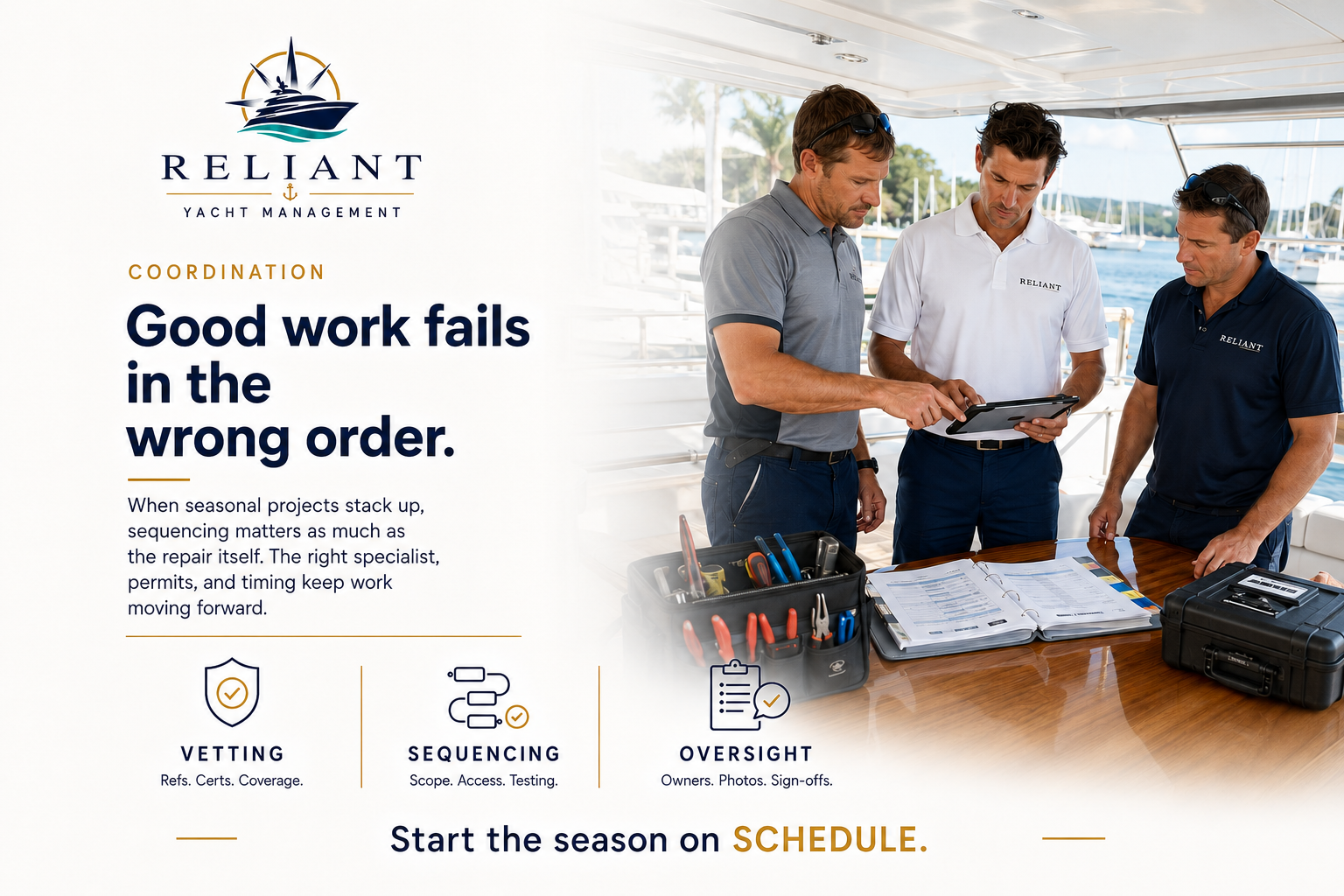
Even excellent vendors create delays and rework if the project is not sequenced correctly. Order matters, especially when your time in Florida is limited.
Think in terms of layers and dependencies:
-
Start with structure and access
- Haul‑outs, hull work, running gear, thru‑hulls
- Any cutting, demolition, or major access work
- Anything requiring the boat to be out of service for safety reasons
-
Next, critical systems
- Engines, generators, fuel systems, batteries, charging systems
- Bilge pumps, steering, fire suppression
- These support almost every other activity aboard
-
Then electrical and electronics
- Wiring, panels, breakers, bonding system
- Navigation equipment, radar, communication systems
- Avoid doing cosmetic work before someone runs new cables behind it
-
Follow with interior, cosmetic, and soft goods
- Carpets, upholstery, headliners, cabinetry refinishing
- Detailing, polishing, ceramic coatings
-
Finish with fine‑tuning and sea trials
- Systems checks under load
- Verifying alarms, gauges, and monitoring systems
- Ensuring all new installations perform as intended underway
A good rule: never install something beautiful on top of something uncertain. Confirm underlying systems are sound before paying for finishes.
3. Preventing Trades from Stepping on Each Other
Uncoordinated scheduling is how wiring gets buried behind new paneling, fresh paint gets scratched by tool bags, and everyone blames everyone else.
Practical tactics to keep trades from colliding:
-
Define clear work windows
- Assign dates and time blocks by trade (e.g., electrical Monday–Tuesday, carpentry Wednesday–Thursday).
- Avoid “whoever shows up, works” scheduling.
-
Control access to the vessel
- Maintain a single board (physical or digital) listing who is approved to be aboard, when, and for what scope.
- Do not allow vendors to bring “extra help” without your authorization and insurance verification.
-
Establish a simple rule: no scope changes without approval
- Small “since we’re here, we also did…” additions create conflicts and cost overruns.
- Require vendors to route all added work through you or your representative for timing and impact review.
-
Hold brief coordination check‑ins
- A 10‑minute weekly call or dockside walkthrough can prevent days of delay.
- Review what’s complete, what’s next, and where one trade depends on another’s work.
When Reliant oversees projects, this coordination is a central responsibility—not an afterthought. Each vendor knows when they are expected, what spaces must remain accessible, and how their work will affect others.
4. Verifying Insurance, Permits, and Compliance
Many owners assume that if a vendor works in marinas regularly, everything must already be in order. That assumption can be expensive.
At a minimum, request and confirm:
-
Proof of insurance
- General liability with adequate limits
- Workers’ compensation as required
- Your yacht and marina named where necessary
-
Licensing and permits
- Local business license where applicable
- Environmental or discharge permits for specific work (bottom painting, fuel tank work, etc.)
- Required approvals from the marina or yard before work begins
-
Safety and standards awareness
- Familiarity with ABYC, NFPA, and Coast Guard requirements where applicable
- For electrical and fuel systems, confirm work is being done to current standards, not “how we’ve always done it”
A professional management partner keeps these documents on file, tracks expiration dates, and confirms compliance before anyone begins work aboard your vessel.
5. Centralizing Communication So Nothing Falls Through the Cracks
Scattered communication is one of the biggest frustrations for seasonal owners: texts from three vendors, emailed estimates, voicemails from the yard, sticky notes from the dockmaster. The result is uncertainty and duplicated work.
Centralizing communication involves:
-
One point of contact
- A single person (you or your owner’s representative) approves work, signs off on changes, and answers vendor questions.
- Vendors know not to make decisions with crew, friends, or well‑meaning neighbors.
-
Consistent documentation
- Every inspection, recommendation, estimate, and invoice tied back to a specific issue or project.
- Before/after photos stored with notes, not buried in a phone’s camera roll.
-
Clear project tracking
- What’s approved, in progress, waiting on parts, or complete.
- Dependencies (e.g., “carpet install cannot begin until water leak is resolved and confirmed dry”).
Reliant’s Vessel Intelligence platform is designed around this need. It consolidates inspection reports, photos, equipment records, vendor activity, maintenance schedules, and project status into one organized view. Artificial intelligence helps surface potential concerns in new photos and align work with manufacturer schedules, but experienced marine professionals still make the decisions and verify the results.
For you as an owner—whether you are five miles or five states away—the outcome is the same: you can see what’s happening aboard and why, without chasing updates across inboxes and text threads.
Turning Your To‑Do List into a Plan
When you return for the season, your yacht should feel ready—not like a construction site you’re managing on your own time.
Coordinating vendors carefully, staging work in the right order, preventing trades from tripping over each other, verifying compliance, and centralizing communication are what turn a scattered list of issues into a controlled, predictable project.
Reliant Yacht Management exists to handle that burden on your behalf—providing professional care aboard and complete visibility ashore. If you’re a seasonal owner on Florida’s Space Coast or in Southwest Florida facing a growing to‑do list, contact Reliant to discuss a structured management and oversight plan for your vessel.