
Why is she still at the yard? Owners ask it about a repair that was quoted at a week and is now into its second month. Usually nobody did anything wrong on purpose. The job slipped into a gap between the owner, the yard and the vendor, and nobody owned the gap.
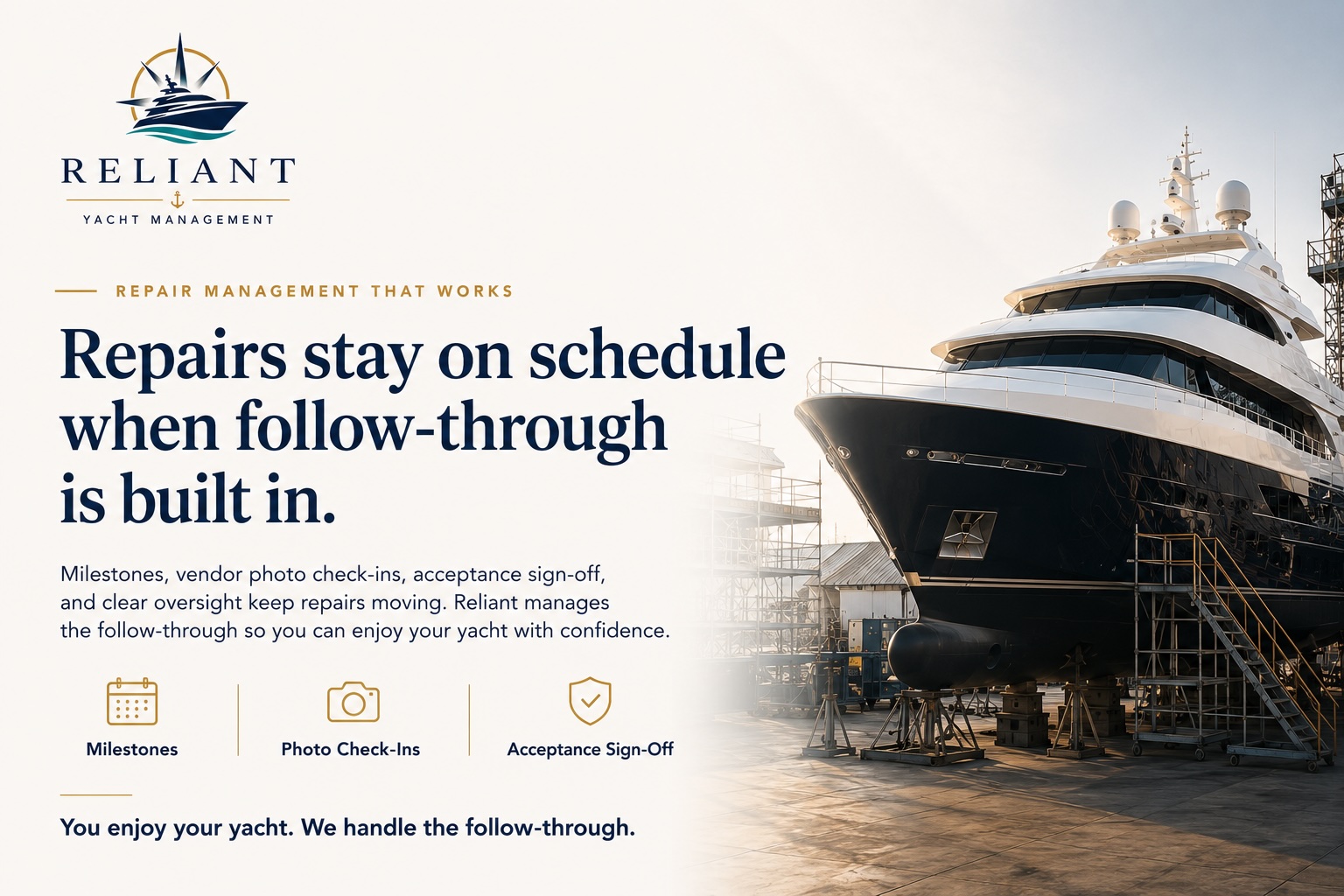
There are three common ways to keep a repair moving: firm milestones, vendor check-ins with photos, and an acceptance checklist. Each one prevents a different kind of delay. If you can only insist on one, make it the acceptance checklist.
Where a repair stalls
Most lingering jobs stall at a handoff. The part was ordered, but nobody confirmed it shipped. The vendor found something else once the panel came off and is waiting on an approval nobody knows they’re waiting on. Or the work is finished, the tech has moved to the next boat, and the job sits as “done” while the fault comes back on the first run.
That last one costs the most time. The boat goes back in the water, the owner plans a weekend, and the same problem is there when they step aboard. Now the vendor has to be scheduled again.
Firm milestones make a delay visible
A milestone is a date attached to a stage of the job: parts ordered, parts received, work started, work complete, sea trial. Writing them down turns “we’ll get to it” into something you can check.
Parts still arrive late and yards still get busy, especially around haul-out season. A milestone shows the delay the day it happens, so someone can ask why and decide what to do next. That only works if someone is looking at the dates and following up. A milestone nobody checks is just a guess.
Photo check-ins show what’s happening
Photos from the vendor during the job tell you more than a status update. A photo of the opened-up space shows what they found. A photo of new hoses and double clamps before the panel goes back on shows work you’ll never see again once it’s closed up.
Check-ins with photos matter most when you’re not nearby. They also surface surprises early, while there’s still time to approve extra work without losing a week. A photo shows progress, though. It can’t tell you the job is finished or that it works.
An acceptance checklist decides when it’s done
This is the step most repairs skip. Before work starts, write down what has to be true for the job to count as complete. Then the vendor, the yard and the owner all know where the finish line is.
Take a seacock replacement during a haul-out. A short acceptance checklist might look like this:
- The new valve opens and closes fully by hand.
- Hoses are fitted with double clamps at the valve.
- No weeping at the hull fitting after the boat is back in the water.
- A photo of the finished installation, and of the old valve removed.
Without a list like that, “done” means whatever the person closing the invoice thinks it means. With one, a job that fails a line stays open, and the fix happens while the vendor is still on it rather than weeks later.
Milestones and photos keep a job moving toward a finish. If the finish was never defined, a repair can hit every date, come with good photos and still be wrong.
What to ask before you approve the next repair
Two questions cover most of it. First, what does finished look like, in writing? Second, who checks it against that list, and how will you see the result? If the answer to the second is “you’ll know when you’re down there,” the job will probably stay open longer than it should.
How we handle repairs
When we manage your boat, repairs and projects run through us from estimate to finish. You see the estimate and the scope before you spend, with no vendor markups. We agree what finished looks like with the vendor up front, follow up on the dates and ask for photos as the work goes.
When the vendor says it’s done, we check the work against the list. A job stays open until it’s verified, with a proof photo of the result. Each job and its photos are kept in Harbor Guardian, the software we use on every boat we manage, so you can see them from your phone. Finished jobs build a dated service history that stays with the boat, which helps at resale and with insurance.
We do this for owners on the Space Coast and in Southwest Florida, whether the job is a single seacock or a shipyard refit.
Message us with the repair that’s been sitting open and where your boat is kept, and we’ll look at where it stands.