
Most of what keeps a boat safe through a storm happens days before anyone on the dock is talking about one. Doubling lines, hanging extra fenders and pulling the shore-power cord are easy jobs on a calm morning in September. They get much harder the afternoon a forecast cone points at Port Canaveral and every owner at the marina wants the same dock cart, the same chafe gear and the same hour of daylight.
The National Hurricane Center’s Atlantic season runs from June 1 to November 30, so a few weeks remain this year and the next season isn’t far behind. Here’s how we stage a boat ahead of weather when we manage her, and how you see where she stands from wherever you are.
Lines and chafe gear come first
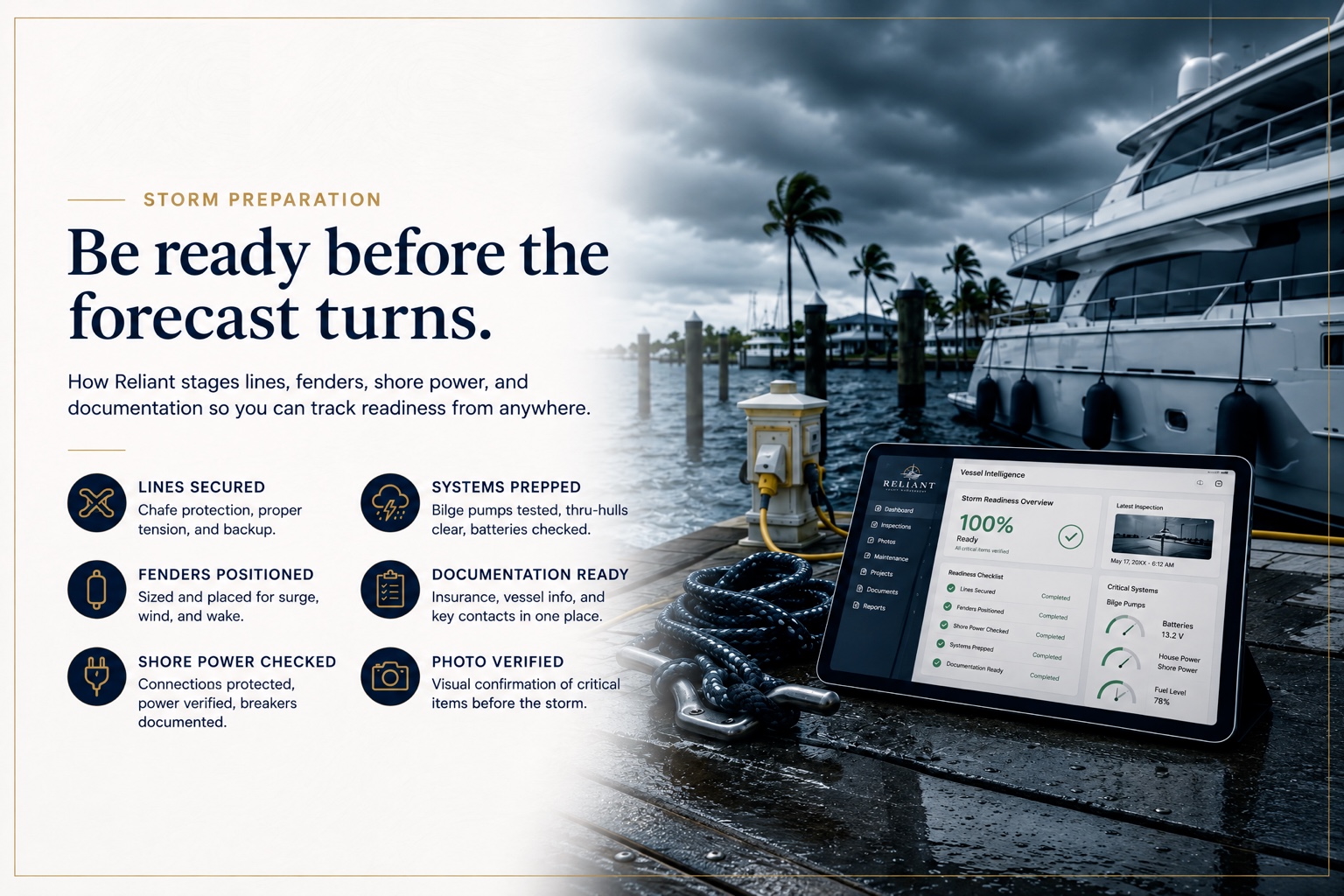
Everyday dock lines are sized and tied for everyday weather. Ahead of a storm, she gets doubled lines, led to separate cleats and pilings so no single point carries the whole load, with enough length to allow for surge and a rising tide. A line tied tight on a normal day can end up holding the boat down as the water comes up.
Chafe gear goes on wherever a line crosses a chock, a fairlead or the edge of a piling. A strong line that rubs through at one spot fails like a weak one. BoatUS’s hurricane preparation guidance covers this same ground: double the lines, protect them from chafe and strip off anything that adds windage.
Lines already aboard get a look too. One that’s stiff, faded or frayed is replaced before the season, when it’s a simple job.
Fenders and canvas
Fenders go at the rub rail, more of them than usual and larger than she needs on a quiet day, because a boat in a blow moves further and hits harder. They’re set for where the hull will meet the dock or piling as the water rises, which isn’t always where it meets it today.
Biminis, enclosures and loose gear come off and get stowed below or ashore. Canvas that’s fine in a sea breeze can tear loose in sustained wind, and it damages frames and stitching when it goes.
Shore power and batteries
Shore power gets less attention than lines and fenders. Before the storm, the cord is unplugged at the pedestal, coiled and stowed, and the shore-power inlet gets a look for corrosion or heat discoloration. Marinas often shut off dock power ahead of a storm anyway, and a cord left in place through surge and debris can come back damaged.
With the cord off, the batteries carry the boat. So they’re checked and charged before disconnecting, and the terminals are cleaned and tight. A battery can read fully charged and still be on its way out, which is why we test it rather than glance at a gauge.
Deciding between the slip and the hard
Some boats ride out weather in the slip and some are better hauled. The answer depends on the boat, the marina and the insurance policy. Many slip agreements and many policies carry their own storm terms, so it’s worth reading yours well before a forecast, when there’s time to ask questions.
If the plan is a haul-out, we arrange it with the yard and confirm the date. If she’s staying in the water on the Space Coast, the staging above is the plan, and it’s written down so nobody is deciding on the fly.
What you see from wherever you are
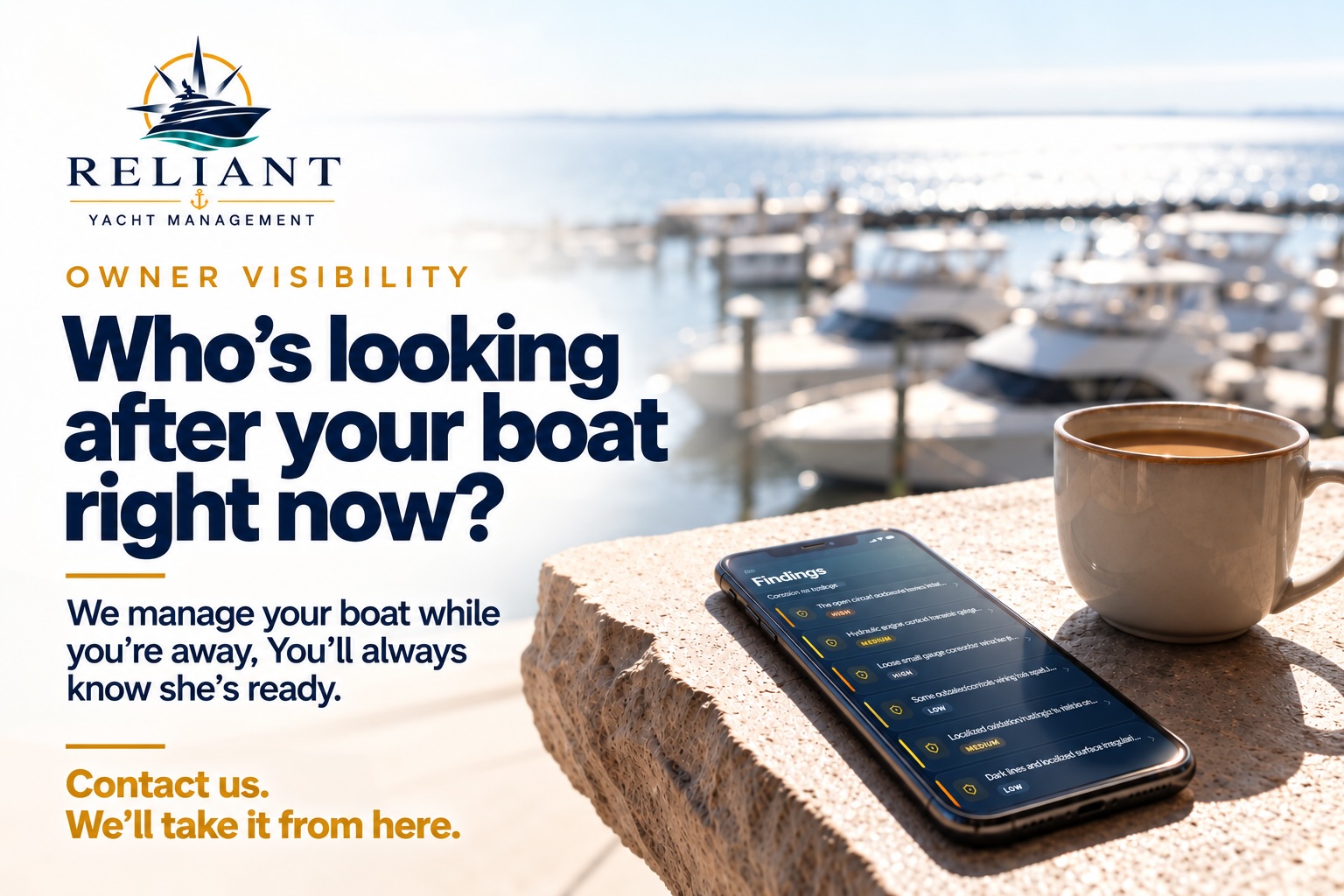
Every step goes on a checklist with a reference photo of how it should look, and a proof photo once it’s done: the lines as they’re tied, the chafe gear in place, the fenders as they hang, the cord off and stowed, the canvas down. All of it sits in the Harbor Guardian owner portal, which you can open from your phone at any hour.
You don’t have to call and ask whether the lines were doubled. You open the record and see them.
Anything we find along the way, a frayed line or a corroded inlet, becomes a finding with photos, a location and a severity. It stays open until the fix is done and verified with a photo. If a vendor is involved, you see the estimate before any work starts, with no markup on it.
After the weather passes
When it’s safe to go back aboard, we inspect her and photograph the same lines, fittings and spaces as before. Those photos are compared with the earlier ones to surface possible changes, and a person reviews each flagged change to decide what it means.
A scuff on the hull is worth noting. A wet locker is a reason to look closer. You’ll hear plainly what we’ve found, what we know so far and what still needs checking. The dated before-and-after record is also there if you need it for an insurance conversation.
Then the lines come back to normal, the canvas goes back up, shore power is reconnected and the inlet is checked again, each with its own proof photo.
With hurricane season closing at the end of the month, now is a quiet time to look at how your boat was set up this year and what you’d change for the next. Message us with your boat and where she’s kept, and we’ll start with a post-season inspection and a storm plan for next year.