
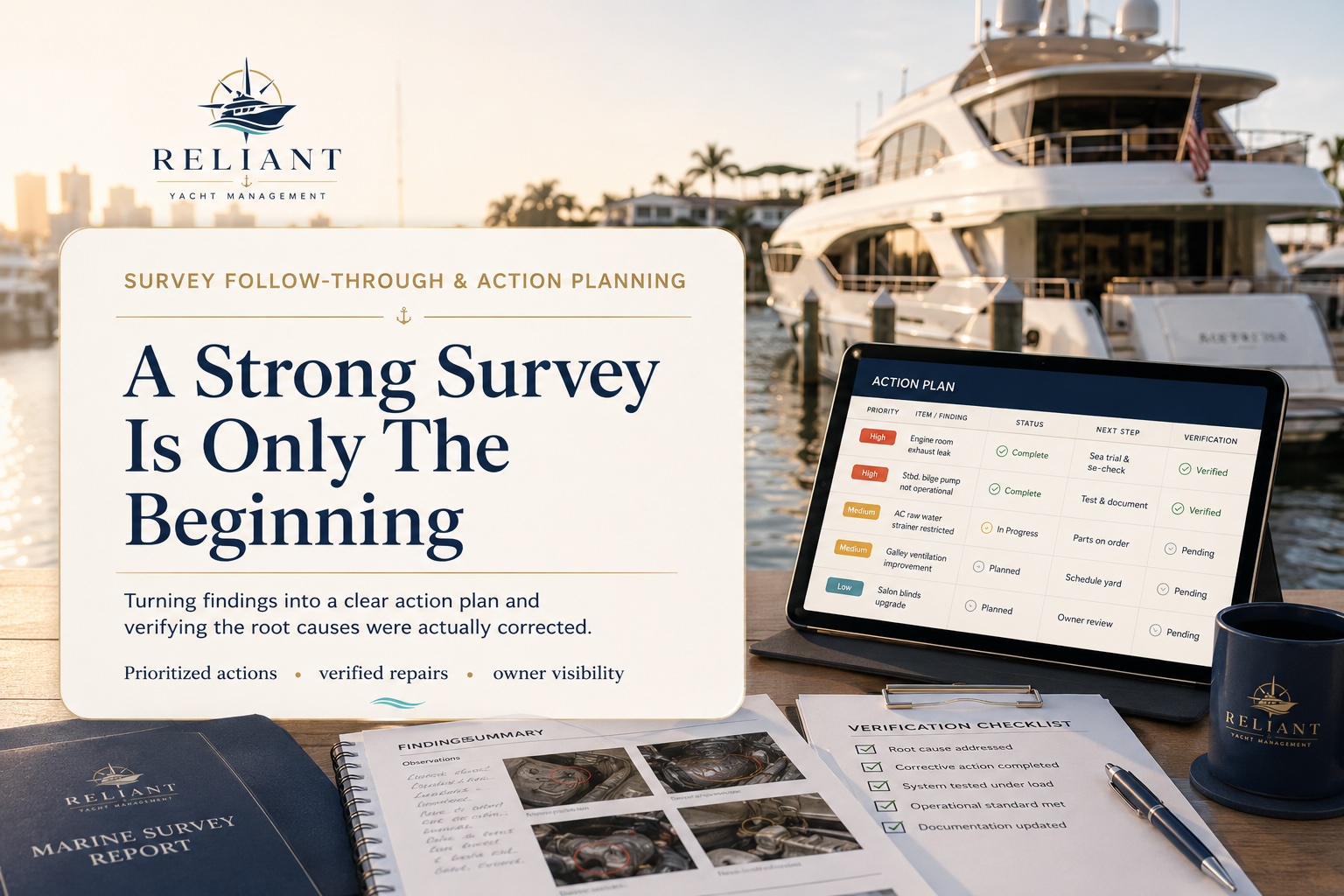
A survey recommendation tells you what the surveyor saw on the day. It doesn’t always tell you why it happened, and that decides whether the fix holds.
We coordinate survey items for owners around Fort Myers, and in Punta Gorda by arrangement. Most of the work happens before anyone picks up a tool and after the vendor says they’re done. At both ends, we’re looking for the cause behind each finding.
Start by sorting the list
Survey reports mix very different findings on the same pages. A scorched shore-power inlet sits next to a cosmetic gelcoat note, and both read the same in a numbered list.
So the first thing we do is sort. Items that affect safety, or that your insurer has asked to see completed, come first. Planned maintenance comes next, with a sensible window. Optional improvements go in their own group, so you can decide on them later without pressure.
Surveyors often reference ABYC standards in their recommendations. When they do, we read the item against what the surveyor actually wrote, so the scope matches the finding.
What we look for before work starts
Before we ask for an estimate, we go aboard and look at the item ourselves, with photos. We ask what would cause it.
Take a discolored shore-power inlet. Replacing the inlet clears the finding, but heat at an inlet usually comes from a poor connection somewhere in the path: worn contacts on the cord’s plug, a loose terminal behind the inlet, or corrosion on either. Replace only the inlet and the same cord can do the same thing to the new one.
A seacock the surveyor found stiff or seized is another case. It might need servicing or replacing, and the hoses and clamps on it deserve a look while someone is there. A single hose clamp below the waterline is a common survey note, so we check the neighboring fittings for the same thing.
We write the scope so the vendor knows to find the cause. The estimate comes to you as the vendor quoted it, with no markup, so you can see what each item costs before you approve it.
What the vendor finds matters
When a job is finished, we ask the vendor two questions: what did you replace, and what did you find? The second answer carries more weight. A technician who opened the panel behind the inlet and found a loose lug has told us something useful. A note that says “inlet replaced” hasn’t.
If the vendor didn’t find a cause, we say so plainly in your record. Sometimes the damage is old and the cause is gone. Sometimes nobody knows yet, and the item stays on our list for a closer look.
How we verify the fix
A job stays open until it’s verified, and verified means one of us has gone aboard and checked the work.
For the inlet, that means photos of the new fitting and the connections behind it, then a look at the connection again after she’s been run on shore power. For a serviced seacock, we exercise the valve, confirm both clamps and photograph the fitting. For anything that only shows up under way, like a vibration, an alarm or a temperature reading, one of our captains takes her out on a sea trial and records what was found.
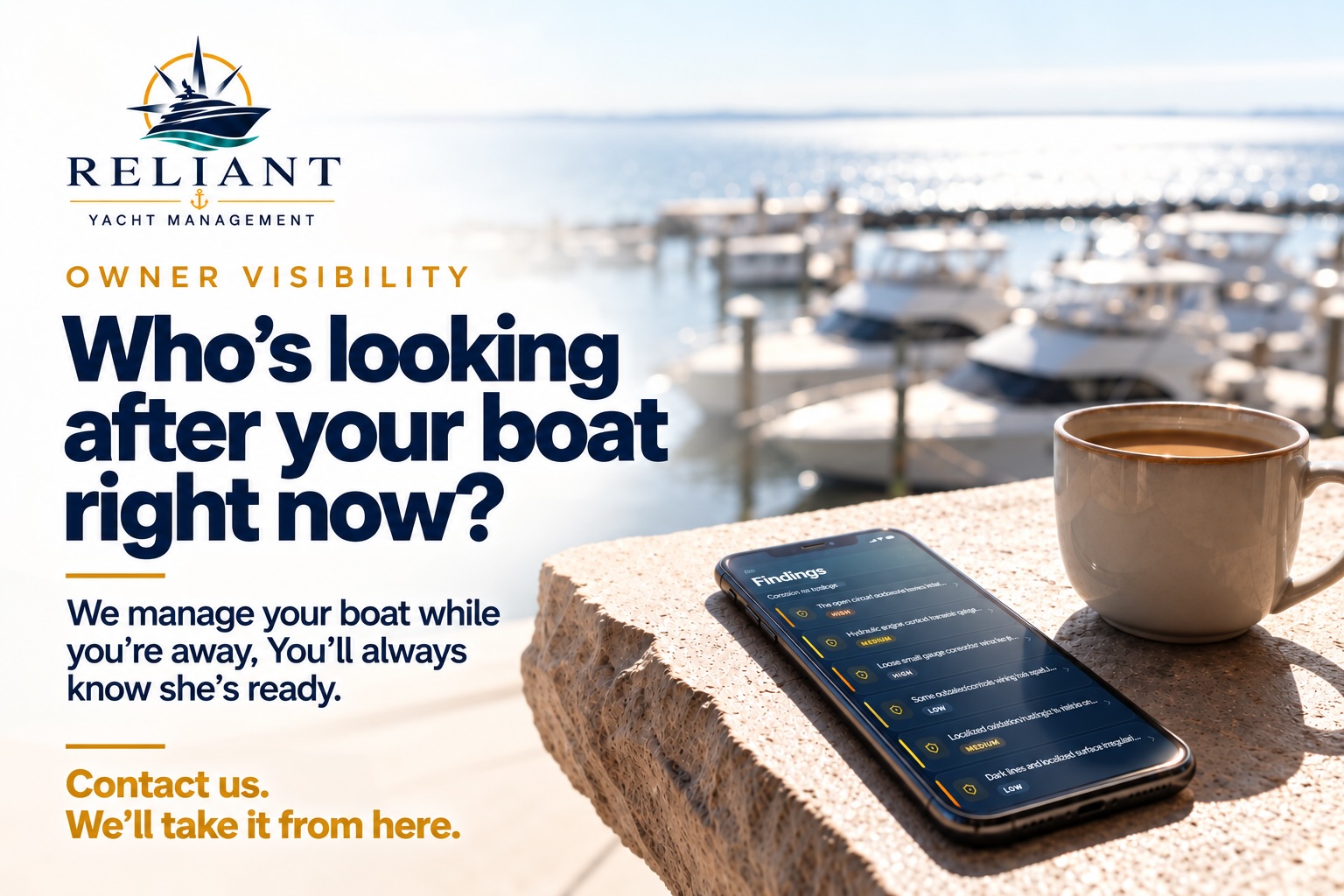
Each item is logged in Harbor Guardian, the software we use on every boat we manage, with photos, its location on the boat and its severity. It carries through to the finished work order with a proof photo. At later inspections, new photos of the same equipment are compared with the earlier ones, and a person reviews any change that gets flagged. A change is a reason to look closer, not proof the repair failed.
What the record gives you
You can see every survey item, its estimate, the vendor’s notes and the proof photo from your phone, wherever you are. When your insurer asks for completion, the record is already there. When you sell, the dated service history shows what was found and how it was dealt with.
If you’re new to the boat, this is usually where we start anyway. The survey review becomes the condition baseline, and every inspection after it is measured against that first set of photos.
Message us with your survey and where she’s kept, and we’ll walk through the list with you before you spend.